


Winter Stress in Dogs

Winter brings more challenges for dogs than just cold temperatures. The transition between heated indoor spaces and cold outdoor conditions, changes in physical activity, and seasonal shedding all require significant adjustments from their bodies. A dog's background, coat type, and age play particularly important roles.
Why Winter Can Be Stressful for Dogs
Winter is often seen as a quieter time of year. Fewer commitments, shorter days, and more time to unwind. For dogs, however, this season doesn't necessarily mean less stress. Quite the opposite: The combination of heated indoor spaces, cold outdoor air, changing daylight hours, and shifts in exercise routines can create stressors that subtly but significantly affect a dog's well-being and ability to regulate their body.
It's not just about individual factors like cold temperatures or coat type. It's about the body constantly having to adapt to very different conditions.
Winter Indoors vs. Outdoors

In their natural environment, dogs' bodies respond to light, temperature, and seasonal changes. Their coats change gradually in response to rising or falling temperatures and the length of daylight hours.
Dogs from southern countries, Eastern Europe, or the Southern Hemisphere are often accustomed to a different balance between indoor and outdoor temperatures. In many regions, homes are only lightly heated during winter.
Certain rooms are heated as needed, while the rest of the house stays cool. As a result, the temperature difference between indoors and outdoors is much smaller than in Central Europe.
In many households, however, conditions are quite different: constant warmth, dry indoor air from heating systems, and artificial lighting well into the evening. This sends conflicting signals to the body. It's winter outside, but spring indoors, sometimes even summer.
This contrast affects more than just a dog's coat. It also influences metabolism, skin, mucous membranes, hormonal regulation, and the body's ability to recover. The body is constantly working to adapt to changing conditions.
That's why it's worth allowing some natural seasonal variation inside your home instead of trying to eliminate every trace of winter. Not every room needs to be heated to the same temperature.
A resting spot in a cooler, quieter room is often better suited to your dog's needs than a bed right next to the heater. This can also benefit our own immune systems.
How Age and Coat Type Affect Cold Tolerance
Puppies and senior dogs are often more sensitive to cold temperatures, although for different reasons.
Young puppies are still developing their ability to regulate body temperature. Their small size, limited body fat, and often less insulating coats can make them lose heat more quickly. Shorter outings, regular opportunities to warm up, and protection from cold, wet conditions are especially important during their first months.
As dogs age, joint problems such as arthritis, reduced muscle mass, chronic health conditions, and lower activity levels can make it harder to stay warm. Cold weather may also increase joint stiffness and discomfort, especially when dogs move less or remain inactive for longer periods.
Senior dogs often benefit from warm, draft-free resting areas, well-fitting winter coats when needed, and shorter, more frequent walks that allow them to move comfortably without overexertion.
Coat type also plays an important role. Short-haired dogs, sighthounds, and dogs with little body fat generally lose heat more quickly than northern breeds or livestock guardian dogs with thick undercoats. These breeds are often better adapted to cold weather but may be less comfortable in overly heated indoor spaces.
Winter Shedding: More Than Just Fur
Seasonal shedding is influenced by daylight, hormones, and environmental conditions. Changes in the normal shedding pattern may become noticeable through excessive hair loss, uneven coat changes, dull fur, or increased scratching.
In a natural outdoor environment, moving through tall grass, bushes, and branches helps loosen and remove hair that is already shedding. Dogs also lose loose hair through scratching, shaking, and rubbing against surfaces. However, this does not replace proper grooming, especially for dogs with thick undercoats.
When dead undercoat remains trapped in the fur, it can become tangled or matted, restricting airflow, trapping moisture, and irritating the skin. Removing loose undercoat helps maintain a healthy, functional coat, although new hair can still grow even when old hair has not yet been brushed out.
Regular, gentle grooming is therefore particularly important during seasonal shedding. A professional dog groomer can remove accumulated loose undercoat or show owners how to care for their dog's specific coat type at home. Choosing the right tools and techniques matters, as a dog's skin is sensitive and excessive brushing or pulling can cause irritation or injury.
Dogs moving between the Southern and Northern Hemispheres may also experience changes in their usual seasonal shedding patterns as they adjust to different daylight cycles.
Unusual shedding, persistent itching, or changes in energy levels should not automatically be attributed to the season. These can also indicate underlying health problems that deserve veterinary attention.
How to Tell If Your Dog Is Cold?

Shivering is a clear sign that a dog is cold, but it often appears relatively late. Many dogs show more subtle changes beforehand, especially in how they move and hold their bodies. One important factor that is often overlooked is the type of movement.
How a dog experiences cold depends not only on the temperature but also on their activity level. At the beginning of a walk, it's important to give the body time to adjust. Joints and muscles should warm up before increasing the pace or intensity.
Dogs that move steadily can maintain their body temperature much more effectively than those that stand still for long periods or walk at a very slow pace. Shivering, even while wearing a coat, is a sign that the dog is no longer generating enough heat.
Common signs that your dog is cold or beginning to lose too much body heat include:
Slower or stiffer movements
Frequently lifting their paws or stopping briefly
Curling up more often or tucking their tail
A tense body posture or hunched shoulders
Reduced alertness or responsiveness
Avoiding breaks or suddenly refusing to continue walking
Ears, paws, or belly that feel cold to the touch
Excessive paw licking, often in response to cold temperatures or road salt
Older dogs, dogs with little undercoat, or those with reduced muscle mass often show these signs sooner and less noticeably than younger, well-conditioned dogs.
When Is It Too Cold to Walk Your Dog?

There's no single temperature that determines when it's too cold to walk your dog. What matters most is coat type, body build, age, weather conditions, ground surface, and type of movement. One particularly important factor is whether a dog moves at a steady pace or mostly walks leisurely, without extended periods of trotting or running.
Dogs with thin coats and no undercoat (e.g., sighthounds and short-haired mixed breeds) may start getting chilled during leisurely walks at temperatures of around +5°C to 0°C. Below 0°C, even protective winter clothing is usually not enough unless they keep moving. Recommended walk duration: 15–30 minutes.
Dogs with an undercoat can generally tolerate temperatures of around 0°C to –5°C during walks, depending on their physical condition, as long as they keep moving and don't stand still for extended periods. Recommended walk duration: 30–60 minutes.
Northern breeds and dogs with very thick undercoats are often more affected by wet conditions, wind, ground surfaces, and inactivity than by cold temperatures alone. They can often tolerate temperatures as low as -10°C, and sometimes even -15°C, as long as they keep moving steadily. These dogs are generally more sensitive to heat than to cold.
Paws, Ears, Road Salt, and Winter Care
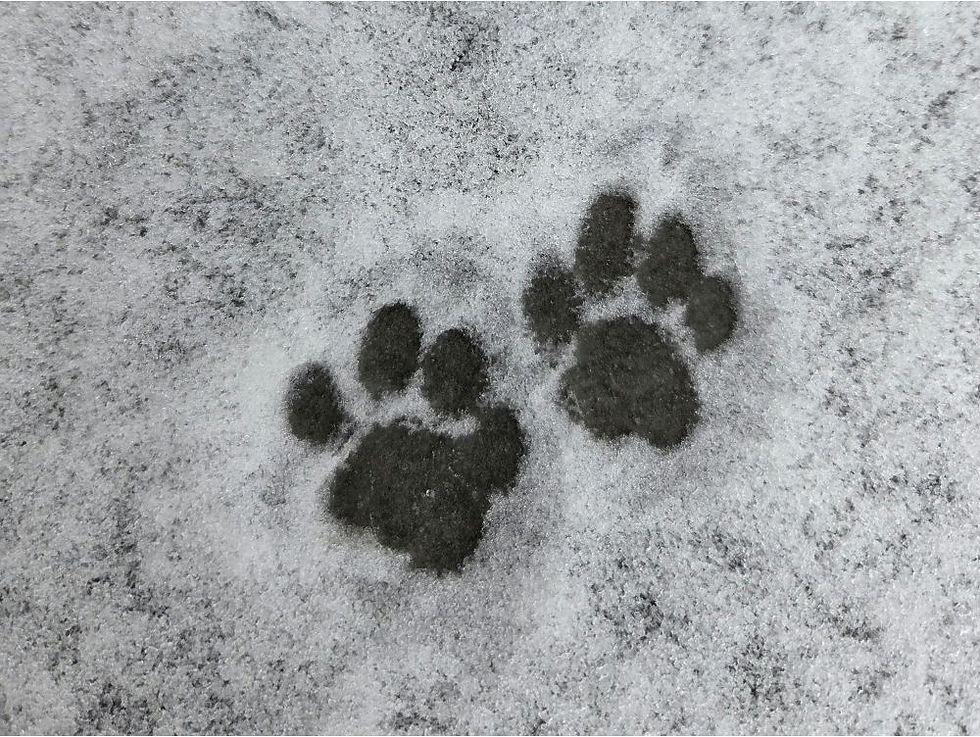
In German-speaking countries, road salt and grit often pose a greater challenge for dogs than snow itself. Salt can irritate the skin, dry out paw pads, and cause painful cracks.
Regular paw care and temporary protection with dog boots may be helpful, depending on the dog, walking surface, and duration of exposure.
Dogs' ears, especially long, upright ears with little fur, are particularly exposed to cold temperatures. Frostbite on the ears can cause hair loss. In freezing conditions, both ears and paws are at risk of frostbite.
Long hair between the paw pads should be trimmed to prevent ice balls from forming. A protective balm or moisturizing paw cream can help create a barrier against moisture, cold, and road salt on both paws and ears.
After each walk, rinse your dog's paws thoroughly with cool water, dry them, and check for irritation or injuries. Consult your veterinarian if you notice wounds or signs of frostbite.
Functional Winter Clothing, Not Fashion
Winter clothing can help protect dogs from the cold, but it should serve a practical purpose. Protective clothing is no substitute for movement.
If your dog gets cold during a leisurely walk, shorter outings, more consistent movement, and adjustments to the environment are more effective than simply extending the walk with additional layers.
When choosing dog clothing, function matters more than appearance. Suitable clothing should be:
Soft and comfortable against the body
Quiet, without rustling or squeaking
Breathable
Properly fitted to your dog's body shape
Dogs are not fashion accessories. Many products, even those sold in specialty pet stores, don't meet these criteria. For sensitive or older dogs in particular, rough seams, stiff materials, or noisy fabrics can cause additional stress.
Functional dog coats are often easy to make yourself using materials you already have at home. Old children's vests for larger dogs, sleeves from fleece sweaters, or warm socks can be turned into custom-fitted dog clothing with just a few cuts and simple adjustments. This saves money and is better for the environment.
The key point remains: If your dog is still cold despite wearing a jacket, they usually need more movement or shorter, better-adjusted walks, not additional layers of clothing.
My Dogs' First Swiss Winter

I've cared for two rescue dogs from Brazil who experienced their first Swiss winter with me: Thor, who is now 14 years old, and Tigrão, who has since passed away.
Both were large, male mixed-breed dogs: sturdy, active, and not what you would typically consider sensitive to cold temperatures. Their furr was short to medium-length coat.
They absolutely loved the snow, happily bounding through it with their tails wagging in excitement.
And yet, winter revealed a different challenge. It wasn't being outdoors that caused difficulties, but the constant transitions between environments, the repeated adjustments, and the reduced opportunity for natural regulation.
Near São Paulo, where we previously lived, winter temperatures could also drop to around 5°C (41°F). The main difference wasn't so much the outdoor temperature as the living conditions. In our homes in Brazil, only one room was heated, while the rest of the house stayed almost as cold as it was outside, but without the wind and moisture.
In Switzerland, their seasonal shedding cycles became disrupted, which may be explained by the reversed seasons between the Southern Hemisphere and Europe. Salt-covered roads were also a challenge for both dogs, as was the paw care they required afterward.
These observations weren't dramatic, but they taught me a great deal. They highlighted how significantly environmental conditions at our latitudes can affect natural processes and how important it is to consider each dog's individual needs.
Conclusion
Winter stress in dogs rarely appears overnight. It develops gradually through the combined effects of indoor heating, cold temperatures, physical activity, coat type, and daily routines. All dogs can be affected, although some are more sensitive than others.
Helping your dog cope often starts not with more activities, but with the right conditions: appropriate exercise, functional winter gear, thoughtful management of indoor and outdoor environments, and a realistic understanding of your dog's age and individual needs.
Sometimes, less activity and more understanding make all the difference.


Comments